Councilors Worrell and Culpepper Call for Immediate Blue Hill Ave. Safety Improvements and Rail Stud
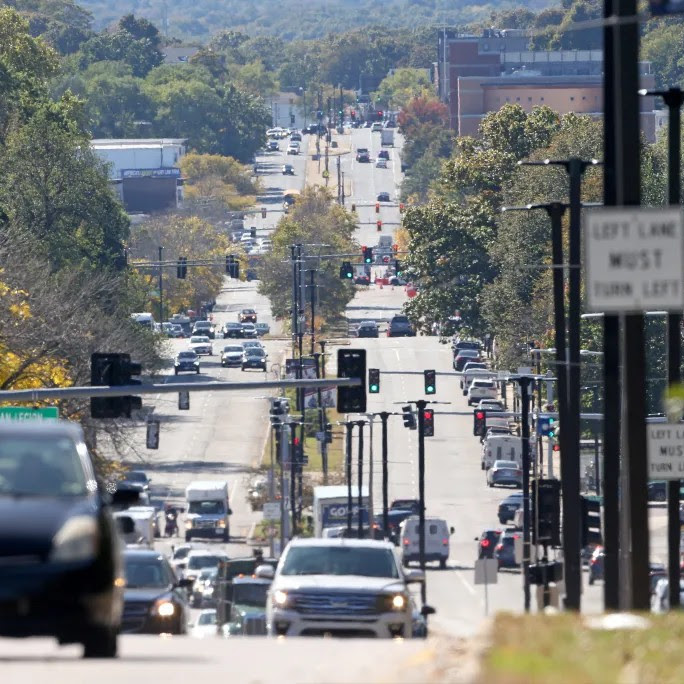
BOSTON, OCTOBER 2, 2026 – Boston City Councilors Brian Worrell (District 4) and the Rev. Miniard Culpepper (District 7) called on the city and state to move forward now with safety improvements along Blue Hill Avenue while asking for a rail rapid transit feasibility study on the road as the city and state wrapped up their latest round of community engagement.
“Four people have died on Blue Hill Avenue in the past five years. We can’t wait another five to seven years to make this street safer,” Councilor Worrell said. “Boston already has $18 million in the capital budget for Blue Hill Avenue. Let’s use it. Fix the crosswalks. Improve the signals. Make the bus stops safer. Slow cars down where we need to. We can make Blue Hill Avenue safer today without deciding for the community what Blue Hill Avenue has to look like 20 years from now.”
Boston received a federal RAISE grant in 2021 that included planning for Blue Hill Avenue. That application contemplated a center-running bus lane roughly two years before the current round of community engagement was completed. The city and state are now seeking approximately $80 million through the Federal Transit Administration’s Capital Investments Grants Small Starts program for the proposed Blue Hill Avenue bus project, although that grant process has yet to be finalized.
“The residents have been firm for nearly two decades: They do not want a center-running bus lane on Blue Hill Avenue. But our community was ignored on this – again,” Councilor Culpepper said. “We need to prioritize safety now, and stop holding basic street improvements hostage for a plan that the community has rejected.”
A center-running bus proposal for Blue Hill Avenue was considered in 2009, but ultimately shelved. The community-driven planning that followed that decision led to the 2012 Roxbury Dorchester Mattapan Transit Needs Study, which has only seen 25 percent of its goals implemented and a lot of transformational investments ignored. That study described a need for rail rapid transit along Blue Hill Avenue, a mode of transit that was available in the first half of the 20th century and that Councilors Culpepper and Worrell have called to return.
“Along with basic safety improvements and bus improvements, we need a feasibility study to be completed for rail along this street, and a full transportation plan for all users to be released along Blue Hill Avenue,” Councilor Worrell said. “Yes, it will take billions of dollars, but grant opportunities are available and this community is worthy of investment.”
Councilors Worrell and Culpepper are calling for a rail feasibility study as part of long-term planning. While the Blue Hill Avenue bus project would use $80 million through the federal Capital Investment Grants program, New York’s Second Avenue Subway Phase 2 received a multi-billion federal commitment through the same program for a 1.8-mile rail extension.
“We’ve seen other places like New York get over $1 billion for a rail project from the same grant that we got $80 million,” Councilor Culpepper said. “Funding opportunities remain available. In the meantime, we need to release the funds we’ve already allocated for safety improvements on Blue Hill Avenue.”
Worrell said the debate is ultimately about what transit equity looks like for Mattapan, Dorchester, and Roxbury and the impact transportation has on everyday life.
“Think about this: You can get on one train in Providence, nearly 50 miles outside Boston, and be at South Station in about an hour. In Mattapan, inside the city of Boston, you take the trolley or bus to a station, transfer to the Red Line, Orange Line or Commuter Rail, and the trip downtown can take longer,” Councilor Worrell said. “Mattapan is part of Boston. Getting downtown shouldn’t feel like we’re coming from outside the city”
The current proposed Blue Hill Ave redesign would cut the number of bus stops from 19 on each side to 10, causing alarm for seniors and disability advocates.
“While we’re having the larger Blue Hill Avenue conversation, people still have to cross Blue Hill Ave today. Kids still have to get to school. Seniors still have to get to the bus,” Councilor Culpepper said. “We have the funds for Blue Hill Ave. Let’s put that money to work and make this street safer now.”
The city and state, which are moving toward the 30% design phase of the project, and are years away from being shovel ready, didn’t provide specifics on how much of the time savings for bus riders comes from eliminating nearly half the stops and how much of the time savings come from the center-running bus lane itself. The MBTA promised another round of engagement sometime next year.
“Our residents bring generations of knowledge, ideas, and commitment to this neighborhood. The planning process should make room for what they have to offer. After a long stretch of disengagement, the City squeezed four meetings into 20 days, alongside four White Stadium meetings. None were held on a weekend. Residents were limited to one minute to speak, and at every meeting, more than 60 people never got the chance. People are showing up because they care about their community and want to help shape its future. The next round needs to honor that commitment with accessible meeting times, enough time to speak, and a clear role for residents’ ideas in the final plan,” Councilor Worrell said.

Maureen Dahill is the editor of Caught in Southie and a lifelong resident of South Boston sometimes mistaken for a yuppie. Co-host of Caught Up, storyteller, lover of red wine and binge watching TV series. Mrs. Peter G. Follow her @MaureenCaught.